GENERAL EDUCATION IN MAHAMA CAMP
Education Background
Education refers to the discipline that is concerned with methods of teaching and learning in schools or school-like environments, as opposed to various non formal and informal means of socialization.
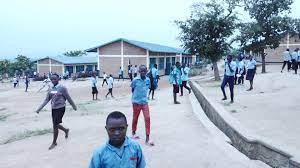
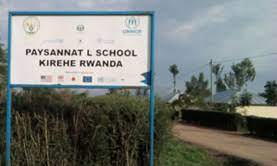
Mahama refugee camp is home to Rwanda's largest school, Paysannat L, which serves over 20,000 children from both the
refugee camp and the Rwandan host community. To effectively manage the large student population, the school was divided
into five campuses in 2019. These campuses are spread across the host community surrounding the camp and within Mahama
camp itself.
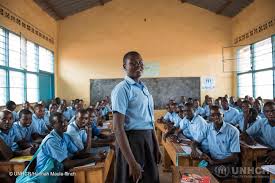
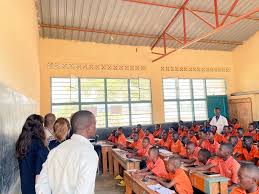
Given the significant number of students, the primary level of the school operates on a double shift system. This means
that some students attend classes in the morning while others attend in the afternoon. In total, there are 11,964
refugee children enrolled in primary education, with 6,031 boys and 5,933 girls. Additionally, there are 4,593 students
attending secondary education, consisting of 2,457 boys and 2,136 girls.
Pre primary & Primary Education
According to a report by the United Nations Refugee Agency (UNHCR), the primary school enrollment rate stands at 68
percent. To accommodate a large number of students, a double shift system is implemented at the primary level, with some
students attending classes in the morning and others in the afternoon. Currently, a total of 11,964 refugee children
(6,031 boys and 5,933 girls) are enrolled in primary school.
In order to enhance education, UNHCR supports connected learning through the Profuturo platform for upper primary
students in levels four to six. Furthermore, efforts are being made to improve teachers' ICT teaching skills.
Unfortunately, the Early Childhood Development (ECD) center, which comprises ten classrooms, is not operational due to a
lack of Water, Sanitation, and Hygiene (WASH) facilities. To address this issue, UNHCR has completed the construction of
eight classrooms and initiated the construction of an additional 28 classrooms. However, limited budgetary resources
pose challenges in constructing latrines and providing technical equipment in the classrooms.
Secondary & tertiary education
According to a report by the United Nations Refugee Agency (UNHCR), the enrollment rates for secondary education and
tertiary education stand at only 34 percent and 5 percent, respectively. Mahama refugee camp is home to the largest school in Rwanda, Paysannat L, which provides education for over 20,000
children from both the refugee camp and the Rwandan host community. To effectively manage a large number of students,
the school was divided into five campuses in 2019, situated within the host community surrounding the camp and within
Mahama camp itself. Among these students, 4,593 (2,457 boys and 2,136 girls) attend secondary education. In collaboration with the UN Refugee Agency (UNHCR) and other partners, UNICEF has contributed to the construction of
additional classrooms at Paysannat L school in the Rwandan host community. Additionally, UNICEF is working in
conjunction with the Ministry in Charge of Emergency Management and Refugee Affairs and the Ministry of Education to
integrate all refugee students into the national school system.